
Cruise Port Parking and Transportation: The Complete Guide
Port-by-port guide to cruise parking and transportation — Miami, Fort Lauderdale, Galveston, Seattle, NYC, and more. On-site vs off-site, shuttles, and arrival tips.
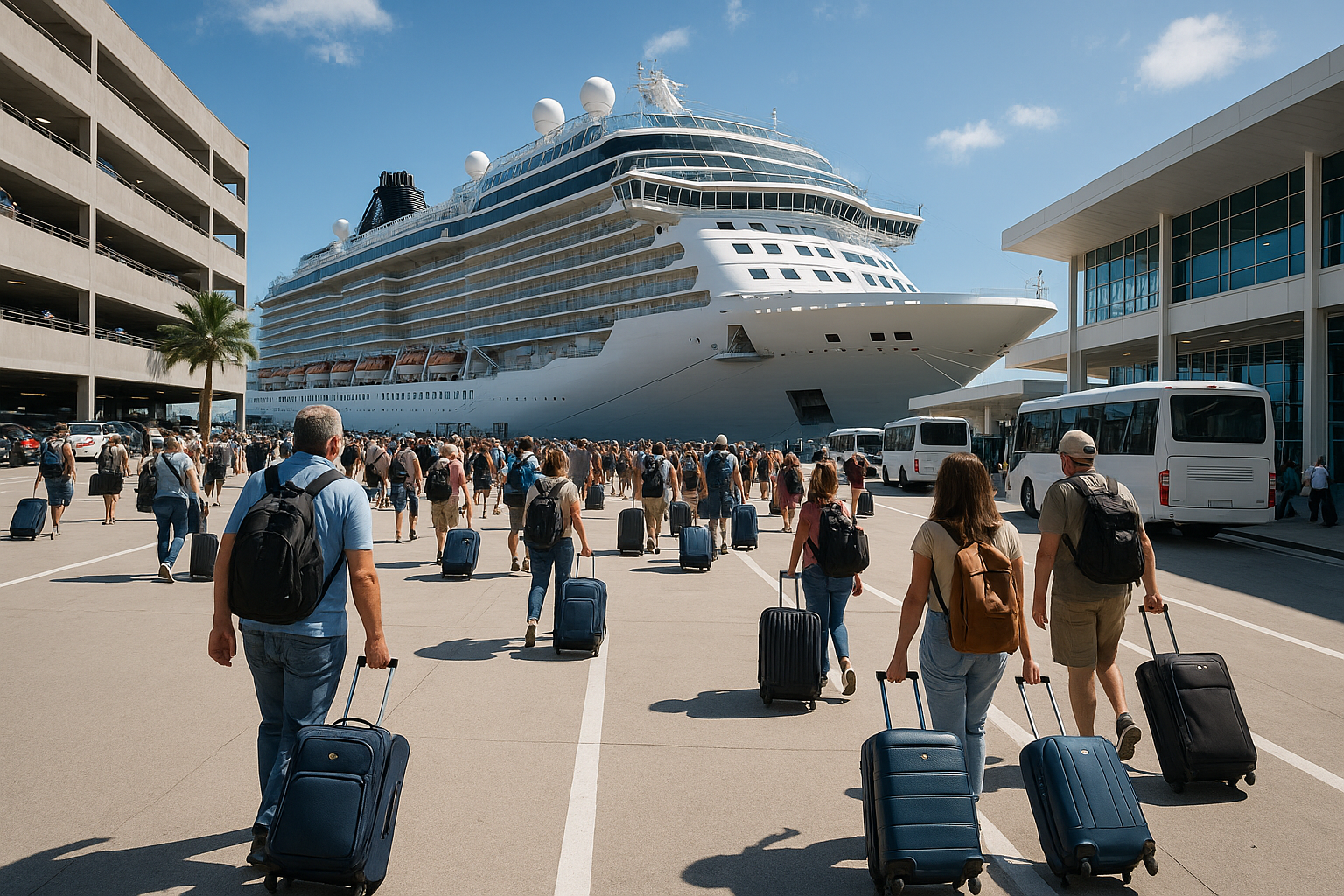
Getting to the cruise terminal is the part of your vacation that nobody talks about until something goes wrong. You arrive at the wrong terminal, the off-site parking shuttle is running behind, you realize you left your passport in the car that’s now a half-mile away in a parking garage, and your boarding window is closing.
This guide covers everything you need to know about getting to and from the major US cruise ports — parking options, shuttle logistics, ride-share realities, and the pre-cruise hotel packages that solve the problem entirely.
How to Think About Cruise Port Transportation
Before diving into port-specific details, there are three universal decisions to make:
1. Drive and park, or arrange transportation? Driving gives you flexibility and no flight risk. Parking costs money ($15–$35/day depending on port). Flying introduces a missed-flight risk that can strand you at home while your ship sails. Many cruisers resolve this by flying in the day before and staying at a pre-cruise hotel.
2. On-site or off-site parking? On-site port parking is convenient and secure. It’s also expensive. Off-site parking typically costs 30–60% less and usually includes a free shuttle to the terminal. The shuttle adds 15–30 minutes each way. For a 7-night cruise, the savings can be $50–$100+.
3. What to keep in your carry-on vs. checked luggage? Your checked bags go to porters at the terminal and may not reach your cabin until mid-afternoon. Your carry-on travels with you through check-in. This matters for planning: medications, boarding documents, swimsuit for the first day, phone charger.
Port-by-Port Parking and Transportation Guide
Port of Miami (PortMiami)
PortMiami is the world’s busiest cruise port, handling more than 7 million passengers per year across 12 passenger terminals.
On-site parking: Covered garages directly adjacent to each terminal. Rates run approximately $22–$25 per day. Parking garages are connected to terminals by walkway — no shuttle needed. Security and lighting are excellent.
Off-site parking: Several private lots cluster around Brickell Avenue and near the MacArthur Causeway. Rates typically run $10–$16 per day with free shuttle service. Popular options include Park N Go and Park ‘N Fly. Shuttle frequency varies; budget 20–30 minutes for the process.
Ride-share (Uber/Lyft): Uber and Lyft both operate pickup and dropoff at PortMiami. Allow extra time during peak embarkation windows (10am–1pm) when surges are common and pickup locations at the port can be confusing. Confirm your terminal letter before arrival — the port is large.
Taxi: Miami’s taxi infrastructure is reliable from hotels and the airport. Expect $25–$45 from Miami International Airport depending on traffic.
Pre-cruise hotels: Miami’s South Beach and Brickell neighborhoods are 10–20 minutes from the port and have extensive hotel options. Many airport-adjacent hotels near MIA offer park-and-cruise packages: stay one night, park for free for the duration of your cruise, and take their shuttle to the port. This is the smartest option if flying in the day before.
Key tip: Know your terminal letter before you arrive. PortMiami has terminals A through G (and beyond) spread across a significant distance. Showing up at Terminal B when your ship is at Terminal F adds 15 minutes and significant stress.
Port Everglades (Fort Lauderdale)
Port Everglades, just east of Fort Lauderdale, is the second-largest cruise port in the US and the primary embarkation point for many Caribbean itineraries. It’s also the embarkation point of choice for cruisers who fly into FLL (Fort Lauderdale-Hollywood International Airport), which is less congested and often cheaper than MIA.
On-site parking: Covered and open-air garages at each terminal. Rates run approximately $20–$22 per day. The port is well-organized and the garages are generally easy to navigate.
Off-site parking: A robust off-site parking market exists within 2 miles of the port. Rates from $7–$14 per day with free shuttle service. EZcruise Parking and Port Parking are well-reviewed options. Shuttles typically run every 15–30 minutes.
From FLL Airport: FLL is approximately 4 miles from Port Everglades. A taxi or Uber costs $15–$25. The Broward County Transit bus runs between the airport and the port for around $2. If you’re arriving day-of and traveling light, public transit is viable.
Pre-cruise hotels: Numerous hotels near FLL offer park-cruise packages. The Fort Lauderdale Marriott Harbor Beach and Embassy Suites Fort Lauderdale are popular choices with shuttle service to the port. Book early — these packages sell out.
Key tip: FLL is significantly less chaotic than MIA for most travelers. If you have a choice of airport when flying into South Florida for a cruise, FLL is often the better experience.
Cape Canaveral (Port Canaveral)
Port Canaveral, about an hour east of Orlando on Florida’s Space Coast, is Disney Cruise Line’s primary home port and also serves Royal Caribbean, Carnival, and Norwegian for Bahamas and Caribbean sailings.
On-site parking: Covered garage directly at the terminal for $19–$22 per day. The port is more compact than Miami or Fort Lauderdale, making navigation simpler.
Off-site parking: Off-site options are plentiful and cheap ($7–$12 per day). Port Canaveral’s surroundings are suburban, and several large parking operations have established near SR-528. Cocoa Beach Cruise Parking and Smart Park are well-reviewed.
From Orlando: Many guests visiting Walt Disney World extend their trip with a cruise from Cape Canaveral. The port is about 60–75 minutes from Disney property. Disney Cruise Line offers motor coach transfers from Disney World hotels directly to the terminal — convenient and worth considering if you’re doing a Disney resort + Disney cruise combination.
Key tip: If you’re combining an Orlando theme park visit with a Cape Canaveral cruise, stay your final pre-cruise night in Cocoa Beach rather than driving back to the port on embarkation morning. Cocoa Beach has multiple affordable hotels within minutes of the terminal.
Port of Galveston
Galveston is the primary cruise port for the Houston and Dallas/Fort Worth markets, serving Carnival, Royal Caribbean, Norwegian, and Disney.
On-site parking: Two covered parking structures adjacent to Cruise Terminal 1 and Cruise Terminal 2. Rates run approximately $17–$22 per day. The port is manageable in size.
Off-site parking: Galveston has a well-developed off-site parking market with rates from $6–$12 per day. Several operators are within a mile of the terminals and run continuous shuttle service.
From Houston: Houston’s two major airports (IAH and HOU) are 50–75 miles from the port. Cruise lines offer motor coach transfers. Rideshare from IAH to the port runs $60–$90 depending on surge. Many travelers driving from Houston or the Dallas area choose to park in Galveston rather than dealing with the logistics of a Houston hotel and morning drive.
Key tip: Book parking in advance during peak season (Christmas, spring break, summer). Galveston’s parking options fill up, and day-of parking availability can be limited.
Port of Seattle
Seattle is the dominant West Coast departure point for Alaska cruises, serving Holland America, Princess, Norwegian, Royal Caribbean, and Celebrity between April and September.
Terminals: Seattle has two cruise terminals — the Bell Street Pier (Pier 66) and Smith Cove Cruise Terminal (Pier 91). Confirm which terminal your ship uses before making transportation plans.
On-site parking: Covered parking at both terminals runs approximately $25–$32 per day, among the highest in the US. Pier 91 has a large parking facility but it fills quickly on busy weekends.
Off-site parking: Several lots near the terminals offer rates from $12–$20 per day with shuttle service. Ease Cruise Parking near Pier 91 is well-regarded. Some lots require advance reservation during peak Alaska season.
From Seattle-Tacoma International Airport (SEA): The Light Rail Link connects SEA airport to downtown Seattle for $3. From downtown, a taxi or rideshare to the terminal costs $15–$25. Total transit cost: under $30. For groups of 2–4, a direct taxi or rideshare from SEA costs $40–$55 and is faster.
Key tip: Seattle embarkation days during peak Alaska season (June–August) are congested. Arrive by 11am to avoid the worst terminal crowds, or after 1pm when early boarders have cleared through.
Port of New York and New Jersey (Manhattan Cruise Terminal / Cape Liberty)
New York has two main cruise departure points: the Manhattan Cruise Terminal (Piers 88, 90, 92 on the West Side) and Cape Liberty Cruise Port in Bayonne, New Jersey.
Manhattan Cruise Terminal: Parking at the terminal runs $40–$50 per day — the most expensive port parking in the US. Most New Yorkers take taxi or car service; most visitors take a taxi from their hotel. Parking independently, most travelers find cheaper alternatives in Midtown.
Cape Liberty, Bayonne NJ: Cape Liberty is the primary Royal Caribbean embarkation point for New York-area sailings and has parking at $22–$26 per day. Accessible via the Bayonne Bridge from Staten Island or via NJ Turnpike from the south.
Getting to Manhattan Terminal: Taxi from Midtown Manhattan runs $20–$35. Ride-share is convenient; the West Side terminal has clear rideshare pickup zones.
Getting to Cape Liberty: Public transit is limited. Most passengers drive or take a private car service. Car services from Manhattan run $60–$100. Parking at Cape Liberty is the most common choice for New Jersey and outer-borough residents.
Key tip: If flying into Newark (EWR) for a Cape Liberty sailing, EWR is only 15–20 minutes by car — far easier than flying into JFK or LGA and dealing with the bridge or tunnel traffic.
Port of New Orleans
Port of New Orleans handles Carnival sailings on a year-round basis and is the most convenient drive-to port for travelers from Texas, Mississippi, Alabama, Tennessee, and Arkansas.
On-site parking: The Julia Street Cruise Terminal and Erato Street Cruise Terminal both have adjacent parking garages at approximately $20–$22 per day. Both are walkable to the French Quarter, making pre-cruise and post-cruise hotel logistics simple.
Off-site parking: Several private lots cluster around the terminal areas for $10–$15 per day with shuttle service.
From New Orleans Armstrong International Airport (MSY): MSY is about 15 miles from the port. Taxi runs $36 flat rate. Uber/Lyft costs $25–$40 depending on surge. The city’s RTA streetcar connects to near the terminal for $1.25, though with luggage this is impractical.
Key tip: New Orleans pre-cruise stays deserve a night or two. The French Quarter, Magazine Street, and the Garden District are all within walking distance of the cruise terminals. Arriving the day before means you can experience one of America’s great food cities, then board refreshed.
Luggage Handling at the Terminal
Port terminals handle thousands of bags with remarkable efficiency, but the system requires you to follow it correctly.
Porters: At every major port, uniformed porters (sometimes called luggage handlers or skycaps) meet arriving cars and take your checked bags. These go onto carts and are loaded onto the ship, arriving at your cabin 2–6 hours after you board.
What to tip porters: $1–$2 per bag is standard. Tip well — if you don’t, your bags go to the bottom of the priority queue.
Always tag your bags: Use the luggage tags your cruise line provides (printed during online check-in). Bags without tags are delayed. Tags should show your name, ship, sailing date, and cabin number.
Keep in your carry-on: Documents, medications, valuables, swimsuit, charger, and anything you’ll want in the first 4 hours onboard.
Arrival Timing
Most terminals begin boarding 10:30am–11am and boarding continues until around 3–3:30pm. Ships typically sail between 4pm–5pm.
Best arrival window: 11am–12:30pm for minimal wait times. Early arrivals (10–10:30am) often wait in a terminal holding area until boarding begins. Late arrivals (after 2pm) rush through check-in with the ship’s departure looming.
If you have a specific boarding group assigned (as Royal Caribbean and Carnival increasingly use), honor your time window — it exists to manage terminal crowding.
The logistics of getting to and from a cruise port are rarely the most exciting part of trip planning, but handling them right means your vacation begins the moment you arrive at the terminal — not the moment you finally stop troubleshooting parking, shuttles, and luggage.