
What Cruise Lines Does Carnival Own? The Complete Cruise Line Family Tree
The complete guide to cruise line parent companies — Carnival Corporation, Royal Caribbean Group, Norwegian Cruise Line Holdings, and all the independent lines.
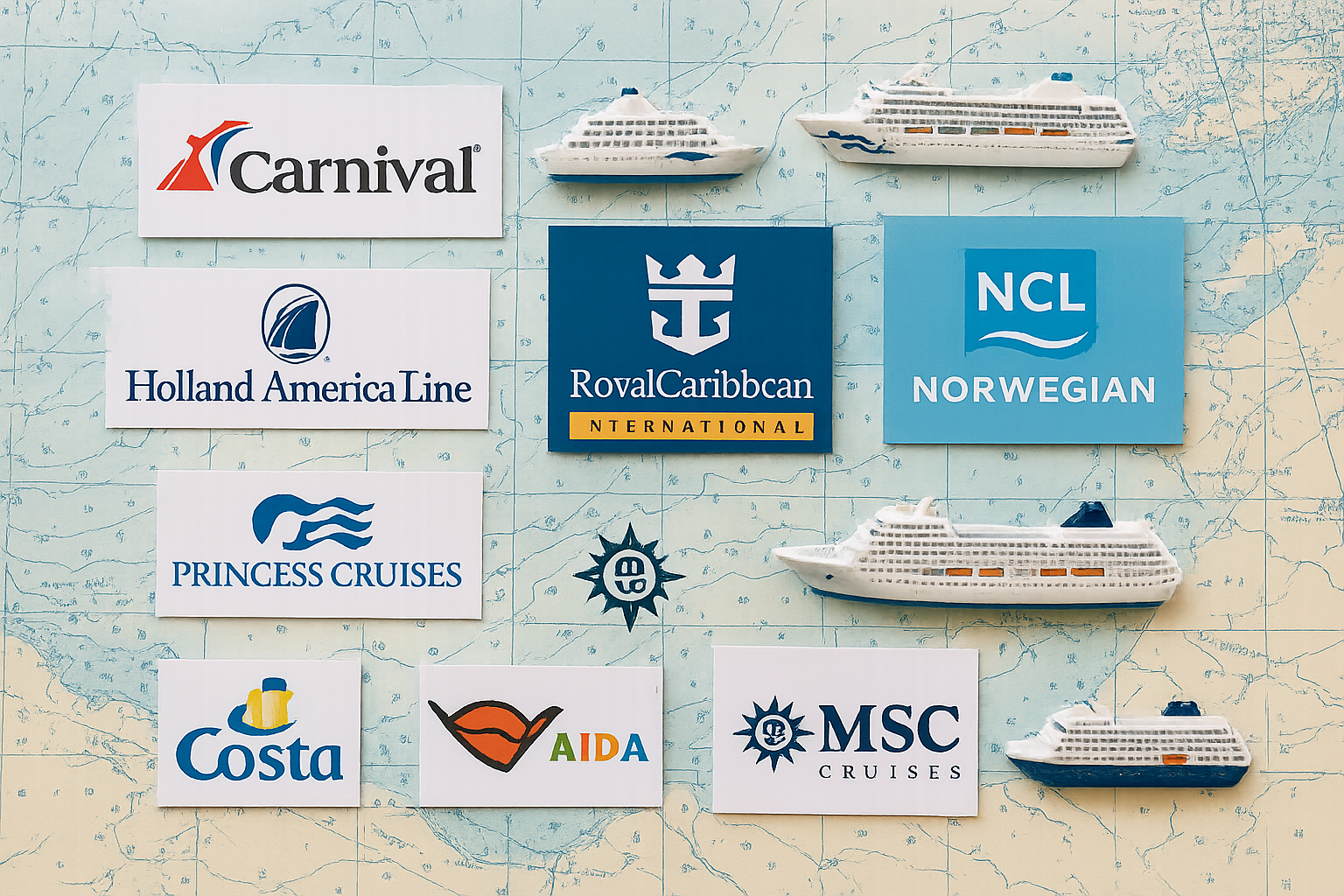
If you’ve ever wondered why there seem to be dozens of cruise lines but the industry feels surprisingly consolidated, the answer is that three giant corporations own most of them. Carnival Corporation, Royal Caribbean Group, and Norwegian Cruise Line Holdings collectively operate more than 90 ships and carry the overwhelming majority of cruise passengers worldwide. Understanding who owns what can help you navigate loyalty programs, compare product lines, and recognize when “switching cruise lines” means more than you might expect.
Carnival Corporation: The World’s Largest Cruise Company
Carnival Corporation is the largest cruise company in the world by passenger count, revenue, and fleet size. It’s a dual-listed company (NYSE: CCL and LSE: CCL) that operates nine distinct cruise line brands across North America, Europe, and Australia. Despite sharing infrastructure and corporate oversight, each brand maintains its own identity, target market, and product.
Carnival Cruise Line
The flagship brand. Carnival is the most-sailed cruise line in North America, known for its value pricing, energetic party atmosphere, and broad mass-market appeal. Carnival pioneered the “Fun Ship” concept and continues to target first-time cruisers and families looking for an affordable, lively vacation. Home ports span the entire U.S. Gulf Coast, East Coast, and West Coast.
Target market: Families, first-timers, value-conscious travelers Price tier: Budget to mid-range
Princess Cruises
Princess is Carnival Corporation’s mid-to-premium brand, known for its globe-spanning itineraries, sophisticated onboard atmosphere, and the “Love Boat” legacy from the 1970s–80s TV show. Princess has a strong Alaska presence (it owns the Princess Lodge properties in Denali and Copper River), and its Pacific Princess itineraries are famous for world cruises.
Target market: Older travelers, couples, destination-focused cruisers Price tier: Mid-range to premium
Holland America Line
Founded in 1873, Holland America is one of the oldest cruise lines in the world and maintains a reputation for classic elegance, longer voyages, and enrichment programming. HAL’s Signature and Pinnacle class ships offer a more refined experience than Carnival’s flagship brand, with a notably older average passenger age and an emphasis on culinary experiences.
Target market: Older adults, longer-voyage enthusiasts Price tier: Mid-range to premium
Seabourn
Seabourn is Carnival’s ultra-luxury offering — small ships (under 600 passengers), extraordinary service ratios, all-inclusive pricing, and itineraries to ports large ships can never reach. Seabourn’s fleet includes expedition vessels for Antarctica and the Arctic. Think butler service, open-bar included, and dining experiences curated by Thomas Keller.
Target market: Affluent travelers, luxury seekers Price tier: Ultra-luxury
Costa Cruises
Costa is Carnival’s primary European mass-market brand, operating mostly from Italian ports and serving predominantly European passengers. Costa is significantly less well known in North America after the Costa Concordia disaster in 2012 reduced its visibility in U.S. markets, but it remains one of the largest cruise lines in Europe.
Target market: European and Latin American travelers Price tier: Budget to mid-range
AIDA Cruises
AIDA is a German-language brand targeting the German, Austrian, and Swiss market with a casual, club-resort atmosphere. The AIDA “kiss lips” bow art is instantly recognizable in European ports. AIDA ships operate almost exclusively in European waters with a few seasonal Caribbean deployments.
Target market: German-speaking European travelers Price tier: Mid-range
P&O Cruises (UK)
P&O is the British version of a mass-market cruise experience — the oldest cruise line in the world, tracing its origins to 1837. P&O Cruises UK (distinct from P&O Cruises Australia) serves British passengers from UK home ports like Southampton, with a product tailored to British tastes, food, and culture.
Target market: British travelers Price tier: Mid-range
P&O Cruises Australia
A separate brand from P&O UK despite the shared name. P&O Australia operates from Australian home ports and targets Australian and New Zealand travelers with a casual, beach-vacation-at-sea approach. It’s one of the most popular cruise brands in the South Pacific region.
Target market: Australian and New Zealand travelers Price tier: Budget to mid-range
Cunard Line
Cunard is Carnival Corporation’s iconic ocean liner brand. Cunard’s Queen Mary 2 is one of the few true ocean liners still in service (as opposed to cruise ships — a meaningful engineering distinction) and operates a regular transatlantic service between Southampton and New York. Cunard maintains a level of British formality — with formal nights, white-glove service, and ballroom dancing — that sets it apart from any other brand in the portfolio.
Target market: Travelers seeking classic ocean liner tradition, transatlantic crossings Price tier: Premium to luxury
Royal Caribbean Group
Royal Caribbean Group (NYSE: RCL) is the second-largest cruise corporation and arguably the most innovation-driven. It’s responsible for some of the largest ships ever built (Icon of the Seas, Wonder of the Seas, Symphony of the Seas) and operates three distinct brands.
Royal Caribbean International
The flagship brand — the one everyone just calls “Royal Caribbean.” Known for massive ships packed with amenities like rock climbing walls, surf simulators, skydiving simulators, water parks, go-kart tracks, and more. Royal Caribbean targets a broad audience but particularly appeals to families and active cruisers who want a resort experience at sea.
Target market: Families, active travelers, first-timers Price tier: Mid-range to premium
Celebrity Cruises
Celebrity is Royal Caribbean Group’s premium brand, offering a more refined onboard atmosphere than the flagship while remaining more accessible than true luxury lines. Celebrity is particularly strong with millennials (for a cruise line) due to its modern aesthetic, excellent culinary programming, and destination-focused itineraries. The Galapagos routes are a signature Celebrity offering.
Target market: Upscale couples, foodies, design-conscious travelers Price tier: Premium
Silversea Cruises
Acquired by Royal Caribbean Group in 2018, Silversea is one of the world’s most prestigious ultra-luxury cruise lines. All-suite ships, butler service, all-inclusive pricing, and expedition-class vessels that reach the most remote corners of the globe. Silversea’s polar expedition program is among the finest in the industry.
Target market: Affluent travelers, expedition enthusiasts Price tier: Ultra-luxury
Norwegian Cruise Line Holdings
Norwegian Cruise Line Holdings (NASDAQ: NCLH) is the third major cruise corporation, operating three brands with very different market positions.
Norwegian Cruise Line
Norwegian pioneered “Freestyle Cruising” — the elimination of fixed dining times and dress codes that were standard on cruise ships through the 1990s. NCL’s large ships (Prima, Viva, Breakaway class) offer a casual, flexible onboard experience with an emphasis on specialty dining and entertainment. Norwegian’s private island in the Bahamas, Great Stirrup Cay, is a flagship destination.
Target market: Adults and families wanting flexibility, entertainment-seekers Price tier: Mid-range
Oceania Cruises
Oceania is NCLH’s premium brand, with mid-sized ships (600–1,250 passengers), destination-intensive itineraries, and an extraordinary culinary reputation. Oceania’s Canyon Ranch Spa partnership, its Jacques Pépin culinary legacy, and its reputation for spending more time in port than competitors make it a favorite among experienced travelers.
Target market: Foodies, destination-focused travelers, active retirees Price tier: Premium to upper-premium
Regent Seven Seas Cruises
Regent is NCLH’s ultra-luxury all-inclusive brand — and when they say all-inclusive, they mean it. Fares include shore excursions, flights, pre-cruise hotel stays, specialty dining, drinks, and gratuities. Regent’s smaller ships (under 750 passengers) and highly curated itineraries justify some of the highest per-day prices in cruising.
Target market: Affluent travelers seeking true all-inclusive luxury Price tier: Ultra-luxury
The Independent Lines: Who Answers to No One
Several major cruise lines operate entirely independently without a corporate parent.
MSC Cruises
MSC is the fastest-growing cruise line in the world and the largest privately held cruise corporation. Owned by the Aponte family (who also control the largest container shipping company in the world), MSC is headquartered in Geneva and has an enormous Mediterranean presence. MSC’s Yacht Club — a ship-within-a-ship luxury concept — offers a premium experience on its larger vessels.
Disney Cruise Line
Disney is owned by The Walt Disney Company and operates as a pure expression of the Disney brand at sea. Disney ships are among the most family-oriented at sea, with exceptional kids’ clubs, character experiences, and Broadway-caliber entertainment. Disney also operates its own private island, Castaway Cay, with a second island (Lighthouse Point in the Bahamas) now open.
Viking Ocean and River Cruises
Viking is privately owned and has grown rapidly from its origins as a river cruise specialist into one of the most respected ocean cruise lines for culturally curious adults. Viking’s ships are adults-only (no children under 18), carry no casino, and emphasize destination immersion over onboard activities. Distinctive for its Scandinavian design aesthetic and port-intensive itineraries.
Windstar Cruises
Windstar operates small, intimate sailing yachts and motor yachts that access ports large ships can never visit. The company was acquired by Archipelago Capital Partners and is managed independently.
Does Parent Company Ownership Affect Your Experience?
Mostly, no — each brand runs its own operation with its own ships, crew, menus, and culture. But a few things do cross between sister brands:
- Loyalty program links: Carnival Corporation brands share some cross-brand loyalty recognition. NCLH brands have had reciprocal benefits at times.
- Shared infrastructure: Ports, logistics, and fuel purchasing happen at the corporate level, which affects operating costs.
- Crew training standards: Parent companies set baseline safety and training standards across brands.
What doesn’t cross over: loyalty points, onboard credits, pricing, or the actual experience. A Princess cruise and a Carnival cruise feel nothing alike despite sharing a parent company — which is exactly the point. Each brand was built to serve a different traveler.