
Caribbean Cruise Packing List You'll Actually Use
The definitive Caribbean cruise packing list — what to wear, what to bring for shore excursions, formal nights, and the things most first-timers forget entirely.
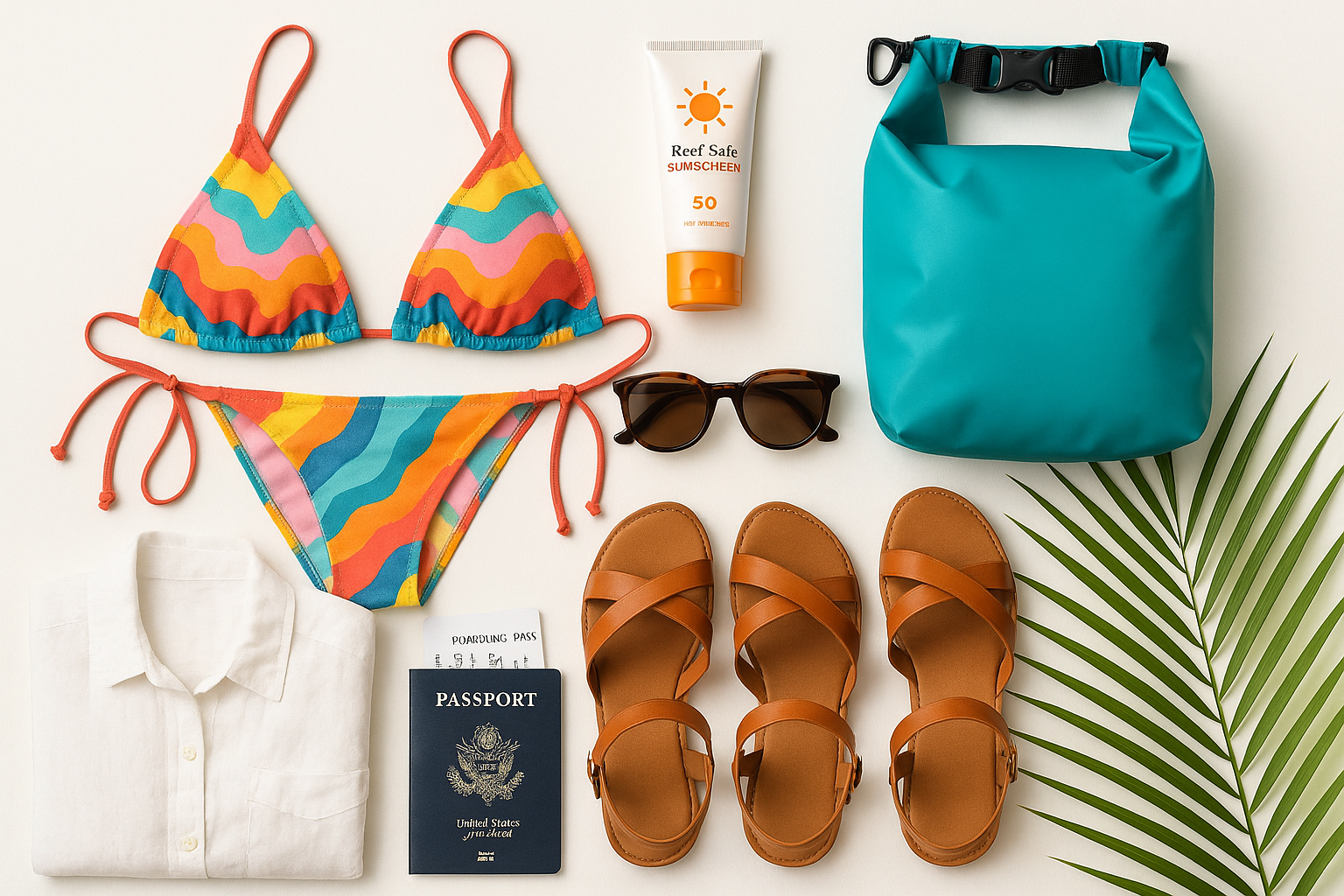
Packing for a Caribbean cruise is a particular art. You’re preparing for multiple environments in one suitcase: tropical heat and humidity at every port, air-conditioned arctic blasts in ship dining rooms and casinos, formal evenings in the main dining room, rugged terrain on shore excursions, and anywhere from three to ten days aboard a floating city. The people who nail it travel light and stress-free; the ones who overthink it haul overstuffed bags and still end up borrowing sunscreen from a stranger on the pool deck.
This list is built from the experience of frequent cruisers and covers everything from the obvious to the things most first-timers genuinely don’t think about.
Clothing for the Ship: Days at Sea
The Caribbean is hot and humid. The ship is aggressively air-conditioned. You’ll move between these two environments constantly, which means layering is your best friend even in a tropical climate.
For the pool deck and casual days:
- Swimwear — bring at least two suits so one is always dry
- Cover-ups, sarongs, or a light linen shirt for walking from pool to bar to buffet
- Sandals and flip-flops (pool deck footwear, not shore excursion footwear)
- Shorts, lightweight pants, and casual tops
- A light cardigan or long-sleeve shirt for air-conditioned spaces
Most mass-market and premium cruise lines have a “smart casual” standard for the main dining room in the evenings — no swimwear or tank tops. This is enforced, especially on Carnival, Royal Caribbean, and NCL. Lightweight trousers or a casual dress handles this easily.
For formal nights:
Most 7-night Caribbean cruises include one or two “formal” or “elegant” evenings. On mass-market lines, the actual enforcement is relaxed — you won’t be turned away for wearing nice slacks and a collared shirt. On premium and luxury lines, the standard is higher.
Men: a blazer and dress shirt covers you on any line. A full suit works everywhere. A tuxedo is optional on all but the most formal luxury lines.
Women: a cocktail dress or dressy separates work across all lines. Evening gowns are welcome but rarely required.
Don’t overpack for formal night — one outfit per formal evening is entirely sufficient. On a 7-night cruise with two formal evenings, you need exactly two formal-capable outfits, not five.
Shore Excursion Essentials
What you pack for ports depends heavily on the type of excursion you’re doing. Here’s a breakdown by activity type:
Beach days:
- Reef-safe sunscreen (see below)
- A waterproof tote or dry bag for your valuables
- Water shoes if you’re visiting rocky beaches or natural pools
- A lightweight towel (ships provide towels for pool deck use but often charge for or don’t supply towels taken ashore)
Active excursions (zip-lining, hiking, kayaking, snorkeling):
- Athletic footwear with grip — your ship sandals won’t cut it
- Moisture-wicking clothing that dries quickly
- A rash guard for water activities (more sun protection than sunscreen alone)
- A small daypack for water, snacks, and your phone
City and cultural tours:
- Comfortable walking shoes you’ve already broken in — not new sneakers fresh from the box
- A crossbody bag or anti-theft travel purse (avoid obvious camera bags in busy port areas)
- Light, breathable clothing that covers shoulders and knees for visiting churches or religious sites
Important port reality check: In Cozumel, Roatan, Belize, and most other Western Caribbean ports, the waterfront area near the pier caters heavily to cruise passengers and is generally safe. Once you venture further, standard travel awareness applies. Keep valuables minimal — your cabin safe is there for a reason.
Reef-Safe Sunscreen: Non-Negotiable Now
This has moved from a nice-to-have to an actual requirement at many Caribbean destinations. Cozumel, Belize, Bonaire, the U.S. Virgin Islands, Hawaii, and a growing list of other locations either ban or strongly discourage chemical sunscreens containing oxybenzone and octinoxate — compounds shown to damage coral reef systems.
Cruise lines are also increasingly moving toward reef-safe policies fleetwide.
Bring mineral sunscreens with zinc oxide or titanium dioxide as the active ingredients. They tend to leave a slight white cast, but newer formulations have improved significantly on this. Pack enough to last your entire trip — on-ship prices are high and port availability varies.
SPF 50 or higher is the practical minimum for a week in the Caribbean. Apply 20 minutes before going outside, reapply every two hours, and reapply immediately after getting out of the water.
Tech and Power Essentials
Cruise ship cabins are notoriously limited on electrical outlets — typically one or two North American standard outlets and one or two European sockets, usually positioned inconveniently near the vanity mirror. If you’re traveling with a partner and you both have phones, cameras, and other devices, you’ll immediately feel the constraint.
Bring a surge-protected power strip. Most cruise lines permit power strips with surge protection (check your line’s specific policy — some prohibit power strips without surge protectors). This is one of those items that looks optional until day two of your cruise, at which point every veteran cruiser becomes an evangelist for it.
What to bring for tech:
- Surge-protected power strip or travel power hub
- Universal adapter if your line’s ships have European outlets
- Waterproof phone case or dry bag for beach days and water excursions
- Portable battery/power bank for long shore excursion days when you’re away from your cabin
- Small action camera (GoPro or similar) for snorkeling and water activities — your phone camera won’t thank you for saltwater
What to know about ship Wi-Fi: It’s almost universally expensive and slow on mass-market lines. If you need connectivity, consider a Wi-Fi package purchased in advance (usually cheaper than buying onboard). For a week in the Caribbean, many experienced cruisers simply go offline and don’t miss it.
Medications and Health Essentials
Motion sickness: The Caribbean itinerary typically includes one or two overnight or full-day passages at sea. If you’re prone to seasickness, address this proactively rather than reactively. Options range from over-the-counter Dramamine and Bonine to prescription scopolamine patches (applied behind the ear 24 hours before sailing). Ginger chews and acupressure wristbands help some people. The ship’s medical center can also provide prescription-strength options but at a premium.
Sun-related: Aloe vera gel for sunburn. Pain reliever for headaches from heat and sun exposure. Lip balm with SPF — lips burn in the tropics faster than you expect.
GI health: The change in diet (richer food than most people eat at home, more alcohol, different water) can affect digestion. Bring antacids, anti-diarrheal medication, and anything you normally keep in your medicine cabinet for stomach upset. Hand sanitizer is available throughout the ship, but a small personal bottle for port days is practical.
Prescription medications: Bring more than you need — a minimum of two extra days’ supply beyond your trip length. Store some in your carry-on and some in your checked luggage. Do not pack all your prescriptions in checked bags that get handed off at the pier; there’s a nonzero chance of bags being delayed.
What the Cruise Line Provides
First-timers often overpack because they don’t know what’s already waiting in the cabin. Here’s what you can reliably expect from most cruise lines:
- Shampoo, conditioner, and body wash (quality varies — budget lines provide basic hotel-style dispensers; premium and luxury lines offer better brands)
- Towels for the pool deck (returned to your cabin nightly, refreshed by your cabin steward)
- A hair dryer (low-powered — if you have thick or long hair, bringing your own travel dryer is worthwhile)
- Life jackets (stored in the cabin — do not bring your own)
- An iron is generally NOT provided (and personal irons are prohibited due to fire risk) — use the ship’s self-service laundry room or request ironing from the laundry service
What you cannot count on: beach towels for shore use, reef-safe sunscreen, sufficient electrical outlets, and adequate phone/laptop charging capacity.
Bags and Luggage
One carry-on for embarkation day. Checked luggage goes directly to baggage handling and typically arrives at your cabin 2 to 4 hours after you board. Your carry-on should hold everything you need for your first hours onboard: medications, valuables, a change of clothes, and your boarding documents.
Packing cubes transform your suitcase organization. Dedicate a cube to swimwear and beach gear, one to evening wear, one to daily clothing. This saves the daily excavation of your entire bag.
A soft-sided tote or daypack for port days. You don’t want to carry your full travel backpack around port towns. A lightweight foldable tote that packs into your suitcase takes up no space and solves the problem.
The Actual Checklist
Use this as your final check before zipping up:
Clothing
- Swimwear (2+ suits)
- Cover-ups or light layers
- Shorts and casual tops (one set per day, plus extras)
- Evening wear for MDR (smart casual)
- Formal night outfit(s)
- Athletic/excursion footwear
- Sandals/flip-flops
- Dress shoes (if bringing formal attire)
- Light cardigan or long-sleeve layer for A/C
Health and Sun
- Reef-safe sunscreen (bring plenty)
- Aloe vera
- Lip balm with SPF
- Motion sickness medication
- Prescription medications (extra supply)
- Pain reliever, antacids, anti-diarrheal
- Hand sanitizer
Tech
- Surge-protected power strip
- Phone charger and cables
- Waterproof phone case
- Portable battery bank
- Travel adapter (if needed)
- Action camera (optional)
Documents and Money
- Passport (valid for 6+ months beyond return date)
- Boarding pass/e-docs
- Travel insurance documentation
- Credit card with no foreign transaction fees
- Small amount of local currency for ports
Miscellaneous
- Reusable water bottle (refill on ship; avoid buying plastic water at every port)
- Small daypack or foldable tote for port days
- Packing cubes
- Laundry bags for dirty clothes
Pack two days before you leave, not the night before. This gives you time to realize what’s missing while there’s still time to buy it. The Caribbean forgives a lot, but running out of reef-safe sunscreen on day three — when you’re paying $40 for a small bottle in a gift shop — tests everyone’s vacation mood.