
Which Cruise Line Has the Best Food? A Dining Comparison Guide
We compare main dining rooms, specialty restaurants, buffets, and dietary options across cruise lines to help you find the best food at sea for your budget.
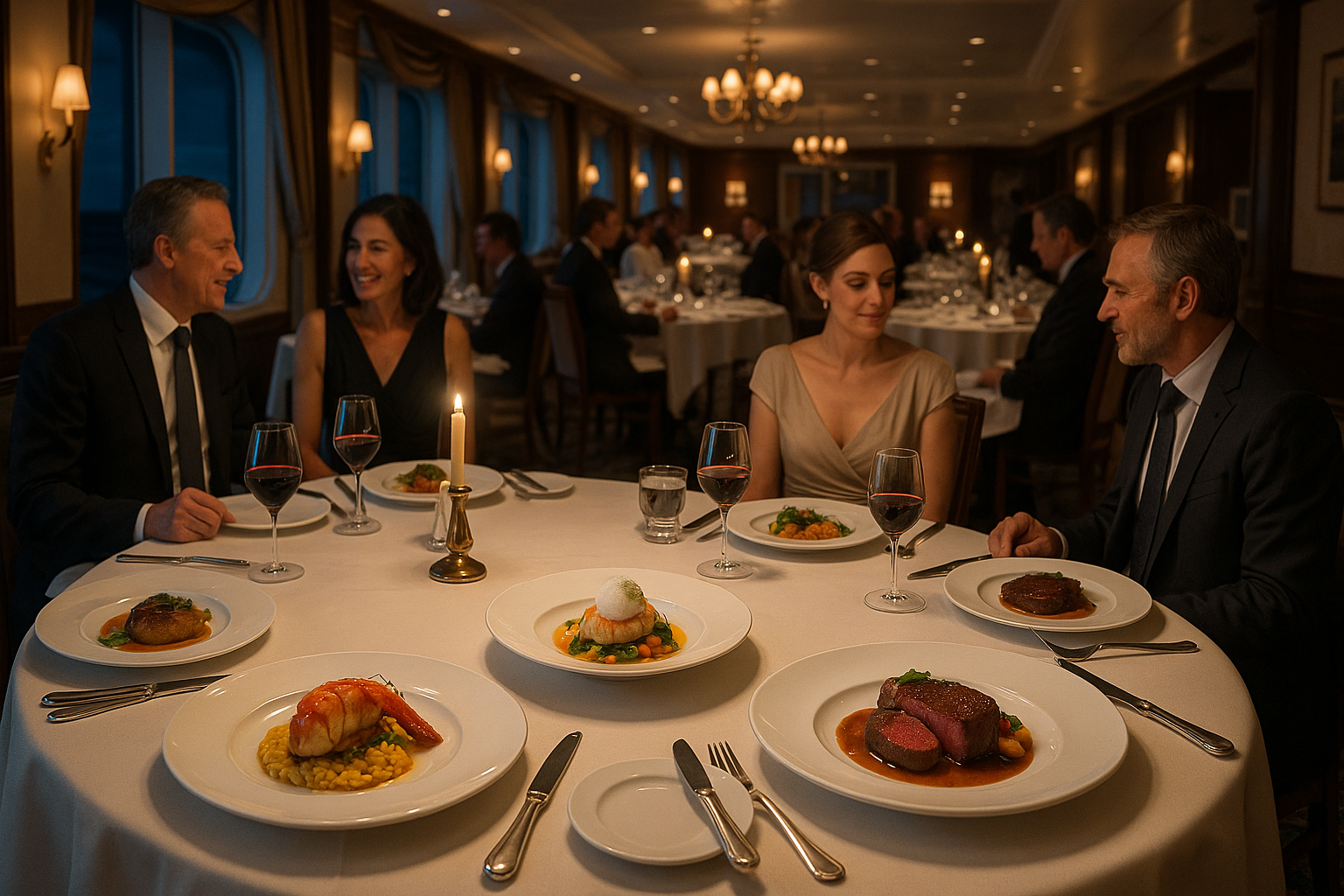
Food is one of the most talked-about aspects of any cruise vacation — and one of the most divisive. Ask ten cruisers which line has the best food and you’ll get ten different answers, usually delivered with great conviction. The reality is that dining quality varies significantly not just between cruise lines but within them, depending on the ship, the specialty restaurant, the time of year, and what you order.
This guide cuts through the anecdotes and gives you a structured comparison across the cruise lines that matter most: mass-market, premium, and luxury. We’ll cover the main dining room, the buffet, specialty restaurants, included vs. extra-cost dining, and how each line handles dietary needs.
How to Think About Cruise Dining Tiers
Before comparing lines, it helps to understand that cruise dining falls into three distinct price tiers — and food quality tracks fairly closely with what you pay for your cabin.
Mass-market lines (Carnival, Royal Caribbean, Norwegian, MSC) offer solid, volume-production dining at no extra cost. You won’t mistake the main dining room for a Michelin-starred restaurant, but you’ll eat well and have variety. These lines make their money partly by upselling specialty restaurants.
Premium lines (Celebrity, Holland America, Princess, Viking) invest more in the included dining experience. The main dining room feels more like a proper restaurant, menus rotate more frequently, and service is typically more attentive. Specialty restaurants exist but the included options are notably better than mass-market.
Luxury lines (Regent Seven Seas, Silversea, Seabourn, Crystal) include essentially everything — specialty dining, premium alcohol, gratuities — and the food quality competes with high-end land-based restaurants. The staff-to-passenger ratio makes service exceptional.
Main Dining Room Comparison
The main dining room (MDR) is the included, sit-down restaurant that’s open most evenings on every ship. Quality here is where lines diverge most noticeably.
Celebrity Cruises consistently earns the top ranking for MDR food among premium lines. Their culinary team put serious effort into menus that feel curated rather than committee-designed. The Blu restaurant on Aqua-class ships is a step above even their standard MDR.
Holland America has a reputation for solid, classic European-influenced cuisine in the MDR. The Pinnacle Grill upsell aside, their included dining room is genuinely good — portions are generous, menus change nightly, and they don’t skimp on ingredients.
Princess Cruises lands in a similar tier. Their Crown Grill specialty restaurant attracts the most attention, but the MDR is a reliable, pleasant experience with wine pairings available and attentive service.
Royal Caribbean and Carnival occupy similar territory at the mass-market level: capable, consistent, occasionally uninspired. Royal Caribbean’s menus have improved in recent years with cleaner plating and fresher ingredients. Carnival’s MDR is functional and family-friendly but rarely generates the kind of enthusiasm that Celebrity or Holland America does.
Norwegian Cruise Line (NCL) has a different model — they pioneered the “Freestyle Cruising” approach where there’s no fixed dining time and multiple included restaurants instead of one traditional MDR. The tradeoff is that no single venue achieves the same consistency as a well-run dedicated MDR.
Viking Ocean Cruises deserves a special mention. Despite being a newer ocean cruise entrant (they’ve been river cruising for decades), their included dining is exceptional — fresh, Scandinavian-influenced, with genuine attention to seasonal ingredients. For travelers who prioritize food, Viking is one of the most underrated options at sea.
Specialty Restaurants: Where the Real Dining Happens
On mass-market and premium lines, specialty restaurants are where the kitchen pulls out the stops. They cost extra — typically $30 to $75 per person — but the gap in quality compared to the MDR is often substantial.
Royal Caribbean’s Wonderland (on larger ships) is one of the most theatrical dining experiences at sea: molecular gastronomy-inspired dishes, dramatic presentations, and a surrealist Alice in Wonderland theme. It’s not for everyone, but it’s genuinely ambitious.
Celebrity’s Le Voyage (on some ships) reflects a more refined approach — it’s the kind of specialty restaurant that could hold its own in a major city.
Carnival’s Fahrenheit 555 steakhouse is consistently praised as one of the best values in specialty dining on any cruise line. For around $35 per person, you get proper aged steaks, fresh seafood, and service that punches well above the mass-market reputation.
Norwegian’s specialty collection is arguably the largest and most varied — ships like Norwegian Bliss and Norwegian Joy carry 20+ dining venues. The challenge is choice paralysis and the accumulating cost of eating specialty every night. NCL’s dining packages offer better value than paying individually.
Oceania Cruises has built its brand around food. Their included restaurants (the Grand Dining Room, Terrace Cafe, and Waves Grill) are better than most lines’ specialty venues. Their specialty restaurants — Red Ginger for Pan-Asian cuisine, Ember for contemporary American — are exceptional. If culinary travel is a priority, Oceania deserves serious consideration.
Buffet Quality: The Honest Assessment
The buffet — called the Lido Deck, Windjammer, or various other names depending on the line — is where cruise food gets the most criticism. In fairness, feeding 3,000 to 5,000 people from a self-service cafeteria operation multiple times a day is a genuine logistical challenge.
Royal Caribbean’s Windjammer is large, well-organized, and offers more variety than most. Food quality is uneven, as you’d expect from buffet-scale production, but there are usually fresh options alongside the steam tray standards.
Celebrity’s Oceanview Cafe is the premium version of the cruise buffet — smaller crowds (Celebrity ships carry fewer passengers relative to their size), fresher ingredients, and a noticeably higher attention to presentation.
Carnival’s Lido Marketplace leans hard into comfort food — pizza, burgers, deli sandwiches — with less attention to lighter or international options. If you want a burger at 2 AM, Carnival has you covered. If you want something more nuanced, you may be disappointed.
MSC’s buffet varies significantly by ship. Their newer Meraviglia-class ships have better buffet setups; older vessels in the fleet can feel cramped and limited.
Holland America’s Lido Market is consistently one of the better mass/premium buffets — cleaner setup, more variety, and it tends to not feel as frenzied as Royal Caribbean’s Windjammer on a sea day.
Celebrity Chef Partnerships
Several cruise lines have pursued celebrity chef partnerships to elevate their dining profile. The results are genuinely mixed.
Gordon Ramsay has partnered with Royal Caribbean — his fish and chips concept appears on select ships. It’s a casual venue that does what it promises, but it’s not the full Gordon Ramsay restaurant experience.
Nobu Matsuhisa has partnered with Crystal Cruises for a proper Nobu restaurant at sea. On luxury lines where this works, it works well — Crystal has the kitchen talent and ingredient quality to pull it off.
Emeril Lagasse’s partnership with Holland America produced the Rudi’s Sel de Mer seafood restaurant, which gets strong reviews for its French seafood bistro concept.
Jacques Pépin’s influence on Oceania is the most significant celebrity chef relationship in cruising. Pépin serves as culinary ambassador, and his involvement shows in Oceania’s commitment to classical French technique throughout their menus.
Included vs. Extra-Cost Dining: What You Actually Get for Free
Here’s a practical breakdown of what’s included in your fare on major lines:
| Line | MDR | Buffet | Casual Included Venues | Specialty Cost |
|---|---|---|---|---|
| Carnival | Yes | Yes | Pizza, deli, grill | $35–$55/pp |
| Royal Caribbean | Yes | Yes | Park Cafe, Sorrento’s pizza | $35–$75/pp |
| Norwegian | Multiple free restaurants | Yes | O’Sheehan’s pub | $30–$60/pp |
| Celebrity | Yes | Yes | Mast Grill, AquaSpa Cafe | $45–$75/pp |
| Holland America | Yes | Yes | Dive-In, NY Deli | $45–$80/pp |
| Oceania | Yes, multiple | Yes | Multiple casual venues | $45–$75/pp |
| Viking | Yes, multiple | Yes | World Cafe, Mamsen’s | No specialty charge |
| Regent | Yes, multiple | Yes | Multiple venues | Included |
| Silversea | Yes, multiple | Yes | Multiple venues | Included |
The luxury line math is important: when you factor in the cost of buying specialty dining packages, premium drink packages, and gratuities on mass-market lines, the all-inclusive price of a luxury cruise becomes more competitive than the sticker price suggests.
Dietary Accommodations
Vegan and vegetarian: All major cruise lines now offer plant-based options in the MDR, but quality and creativity vary widely. Celebrity has made the most deliberate effort here — their plant-based menus are genuinely thoughtful, not an afterthought. Holland America and Princess have improved significantly. Carnival and Royal Caribbean offer options but with less consistency.
Gluten-free: Every major line can accommodate gluten-free requirements — you’ll need to flag this during booking and often confirm with your MDR server each night. The kitchen will typically prepare your dish separately. The earlier you communicate your needs, the better the results.
Kosher: A small number of lines (primarily those with significant Israeli or Jewish clientele) offer proper certified Kosher meals. MSC, Royal Caribbean, and Celebrity can accommodate Kosher requests, but you must arrange this well in advance — typically 60 to 90 days before sailing. Meals are pre-packaged and reheated on board rather than prepared fresh.
Severe allergies: This is where the better-run premium and luxury lines earn their distinction. The additional staff-to-passenger ratio means the kitchen can handle complex allergy requirements more carefully. On mass-market lines, communicate your needs clearly and repeatedly — don’t assume it will be remembered from night to night.
The Bottom Line
If food is your top priority and budget is not a constraint, Oceania Cruises and Viking Ocean offer the best culinary experience in cruising. Oceania’s “finest cuisine at sea” positioning is not just marketing — they back it up consistently.
Among premium lines, Celebrity leads on both MDR quality and specialty dining creativity. Holland America is a close second with stronger buffet performance.
Among mass-market lines, Norwegian offers the most variety (though at a cost) and Royal Caribbean has made the most noticeable quality improvements in recent years. Carnival is the most consistent at what it does — comfort food done well at scale.
The worst value in cruise dining isn’t bad food — it’s paying specialty restaurant prices every night because the included MDR is underwhelming. If the included dining is a priority, it’s worth spending a little more on a premium line where you won’t feel pressured to upsell yourself to a decent meal.