
Bahamas Cruise Guide: Nassau, Private Islands, and How to Choose Your Itinerary
The complete Bahamas cruise guide — comparing 3, 5, and 7-day itineraries, private islands like CocoCay and Castaway Cay, Nassau port tips, and the best short cruises from Florida.
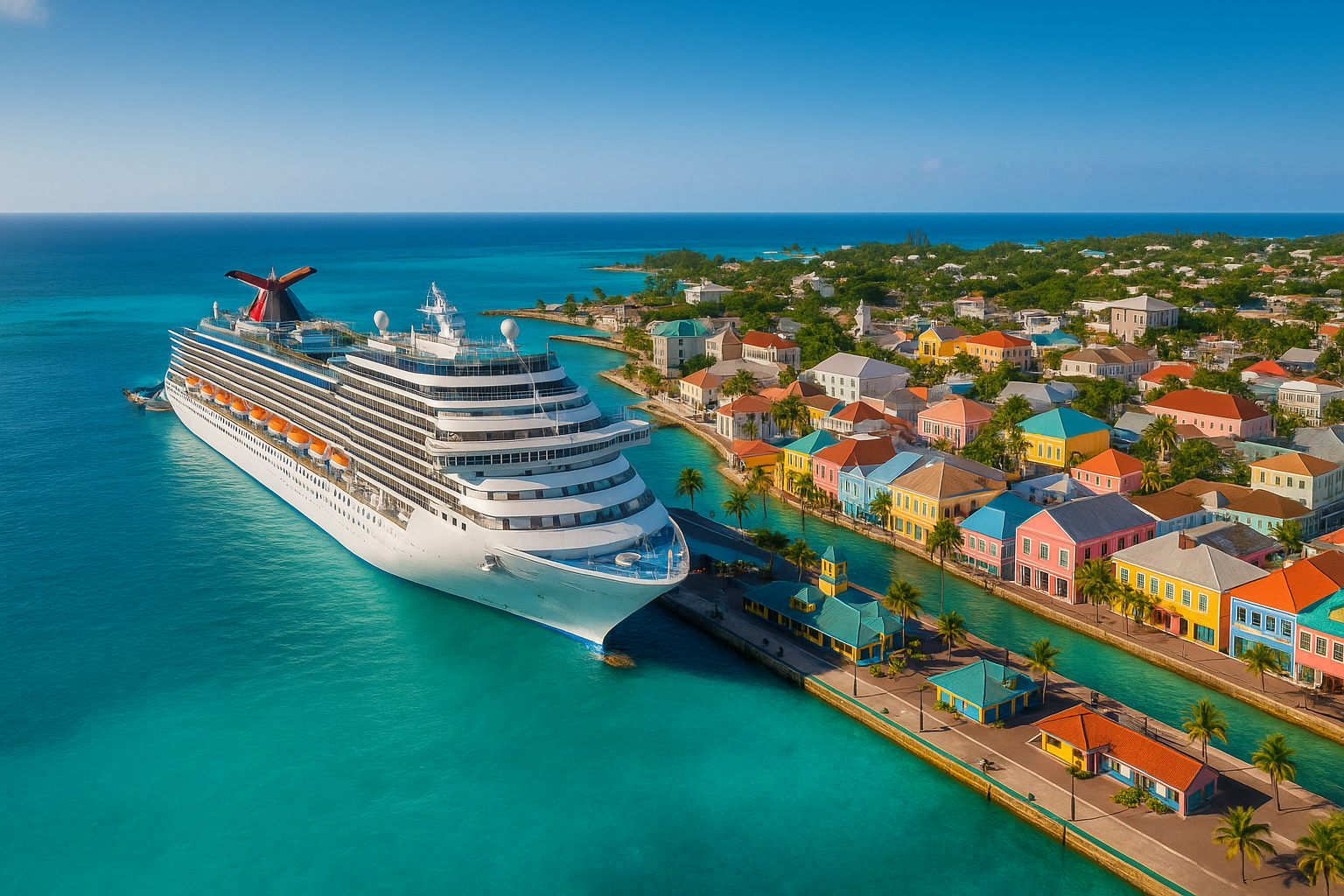
A Bahamas cruise is one of the most popular first-cruise choices in the world — and for obvious reasons. The ports are close to South Florida, the itineraries are short, the water is that particular shade of turquoise that makes people question whether photos have been edited, and the price point is accessible. But the Bahamas cruise market has grown considerably more complex over the past decade. Private islands now dominate many itineraries. Port experiences vary enormously depending on where you dock. And the 3-day, 5-day, and 7-day options all suit different travelers. Here’s how to sort it all out.
Choosing Your Itinerary Length
3-Night Bahamas Cruise
Three-night sailings are the gateway drug of cruising — inexpensive, logistically simple, and genuinely representative of what a cruise vacation feels like. A typical 3-night Bahamas itinerary from Miami or Fort Lauderdale looks something like this: embark Saturday, Nassau Sunday, private island Monday, home Tuesday.
Who they’re for: First-timers wanting to try cruising without a major commitment, weekend travelers with limited time off, groups celebrating milestones who want a fun few nights on the water.
The honest limitation: Three nights goes by very fast. You spend embarkation day navigating check-in and getting your bearings, which means you really only have two full port days before you’re packing to leave. If you want more time to relax and settle into cruise life, a 5-night sailing is a better choice.
5-Night Bahamas Cruise
Five nights is the sweet spot for most Bahamas-focused travelers. You get a genuine day at sea, one or two port stops, and time to actually enjoy the ship itself. Carnival, Royal Caribbean, and Norwegian all offer strong 5-night Bahamas options from Florida ports.
A typical 5-night itinerary might include Nassau, a private island stop, and a sea day — or two private island stops if the line operates multiple islands in the region. Pricing is usually very reasonable relative to the experience, particularly if you book during shoulder periods (September–October, January–February).
7-Night Bahamas and Caribbean Hybrid
Seven-night Bahamas cruises exist, but they often blend the Bahamas with additional Caribbean ports — Grand Turk, Key West, Cozumel — to fill the week. A pure 7-night Bahamas-only itinerary is rare. If you have a week to travel, consider whether a dedicated Caribbean itinerary (Eastern or Western Caribbean) might offer more variety than stretching a Bahamas trip to seven nights.
The Private Island Experience: A Cruise Line-by-Line Comparison
The private island stop has become central to many Bahamas itineraries. Each major cruise line has developed its own island or beach club, and the experiences range from surprisingly excellent to merely adequate. Here’s how they stack up.
CocoCay (Royal Caribbean)
Perfect Day at CocoCay is the most elaborate private island development in the industry. Royal Caribbean has invested over $250 million transforming a formerly nondescript Bahamian island into a full destination resort, complete with the tallest waterslide in North America, an overwater cabana complex, a swimming lagoon, a helium balloon that lifts passengers 450 feet for aerial views, zip lines, and multiple restaurant and bar areas.
It’s impressive — genuinely so — though it has moved firmly in the direction of a theme park rather than a beach day. The included areas are free and well-maintained. The premium areas (Oasis Lagoon private floating cabanas, Thrill Waterpark, the Up! balloon ride) cost extra and add up quickly. Budget accordingly if you plan to do more than the free beach areas.
Best for: Families with kids, active travelers, anyone who wants variety and entertainment beyond a standard beach day.
Castaway Cay (Disney Cruise Line)
Disney’s private island in the Abacos is often cited as the gold standard for private island execution — not because it’s the most elaborate, but because it’s the most thoughtfully designed. The island is divided into family beach areas, an adults-only beach section (Serenity Bay), and an activity zone with bike rentals, snorkel trails, and character meet-and-greets. There’s no charge for the tram that runs around the island. The barbecue lunch is included in your fare and genuinely good. Alcohol is available and reasonably priced for a cruise ship setting.
The catch, of course, is exclusivity: you can only access Castaway Cay on a Disney cruise.
Best for: Families cruising with Disney who want a seamless, kid-friendly experience that matches the onboard culture.
Ocean Cay (MSC Cruises)
MSC’s Ocean Cay Marine Reserve is the most environmentally focused of the private islands, developed in partnership with the Bahamas government to restore and protect a former industrial site. The island focuses on natural beauty — white sand beaches, crystal water, coral restoration areas — rather than manufactured thrills. There’s live music, multiple bars and restaurants, and a lighthouse experience. It’s quieter and more laid-back than CocoCay.
Best for: Adult travelers, couples, and anyone who wants a genuine beach day without crowds and waterslides.
Great Stirrup Cay (Norwegian Cruise Line)
Norwegian’s Great Stirrup Cay has been operating since 1977 — one of the original cruise line private islands. It’s been upgraded significantly with a Lagoon complex, a rum bar, beachside cabanas, and various activity options. It’s solid but less dramatic than CocoCay. NCL also operates Harvest Caye in Belize, which serves their Caribbean itineraries.
Best for: Norwegian loyalists and travelers who want a traditional beach day without premium pricing expectations.
Half Moon Cay (Holland America / Carnival)
Half Moon Cay, in the Abacos, is a beautiful and relatively uncrowded private island shared by Holland America and Carnival. It has one of the best natural beaches in the region — a long arc of powder-white sand with calm, clear water. The facilities are good without being ostentatious. Horseback riding in the surf is the signature activity and worth booking.
Best for: Travelers who prioritize natural beauty and a lower-key experience.
Nassau: What to Actually Expect
Nassau is the most visited Bahamian port — and arguably the most misunderstood. Because it’s a working city of 280,000 people rather than a purpose-built cruise destination, Nassau is more complex, more authentic, and more varied than a private island. It also receives an enormous volume of cruise passengers (multiple ships daily), which concentrates foot traffic in the immediate port area.
The Immediate Port Area
The Nassau cruise port sits at the western end of Bay Street, the main commercial corridor. This area is dense with souvenir shops, jewelry stores, and tour operators pitching excursions. It feels commercial because it is — cruise lines and local operators have optimized this strip for quick tourist throughput. If this is your first impression of Nassau, it’s not fully representative of the city.
Skip: The straw market directly adjacent to the port is worth a brief browse but sells mostly mass-produced goods, not handmade local crafts.
Do: Walk further east along Bay Street toward the historic district. The Queen’s Staircase (66 steps carved from limestone by enslaved workers in the late 1700s) and Fort Fincastle are a short uphill walk and genuinely interesting. The Graycliff Hotel on West Hill Street, one of Nassau’s oldest buildings, is worth walking past.
Cable Beach and Atlantis
Two beach options dominate the Nassau port day. Cable Beach is a strip of resort hotels about four miles west of downtown, with a long public beach accessible by taxi (around $15 each way). Atlantis, on Paradise Island connected to Nassau by bridge, is the mega-resort complex with its famous water park and marine habitat. Day passes to Atlantis are available through the cruise line or directly and typically run $150–$250 per adult depending on the season — expensive, but the water park is genuinely large.
Blue Lagoon Island
Blue Lagoon Island (also known as Salt Cay) is accessible by boat from Nassau and offers a pure beach day experience in a much quieter setting. Snorkeling, swimming with dolphins (paid extra), and kayaking are the main activities. This is a good option if you’ve visited Nassau before and want to skip the city and the Atlantis crowds.
Freeport: Nassau’s Often-Overlooked Alternative
Freeport, on Grand Bahama Island, is less frequently included in Bahamas itineraries than Nassau. It’s a different character: more suburban, less touristy, more focused on casino and resort-style activity. The Lucayan National Park (one of the world’s longest known underwater cave systems) and the Grand Bahama Nature Center are the standout natural attractions. Gold Rock Beach, a 30-minute drive from port, is one of the most beautiful beaches in the Bahamas and rarely crowded.
Freeport was significantly impacted by Hurricane Dorian in 2019 and has been gradually rebuilding. Check current port conditions before booking an itinerary that includes Freeport.
Best Departing Ports for a Bahamas Cruise
Miami (Port Miami)
Port Miami is the world’s busiest cruise port and the most convenient hub for Bahamas sailings. Carnival, Royal Caribbean, Norwegian, MSC, and Celebrity all operate from here. Getting to Port Miami is straightforward from Miami International Airport (about 20 minutes by taxi or Uber) or Miami Beach. Short-term and long-term parking is available onsite at rates typical for major ports ($20–$25/day).
Fort Lauderdale (Port Everglades)
Port Everglades is Miami’s close neighbor and handles nearly as much Bahamas traffic. Many passengers fly into Fort Lauderdale/Hollywood International Airport (FLL) — which is cheaper than MIA on most carriers — and find the port transfer even simpler. Holland America, Princess, Celebrity, and Royal Caribbean all depart from Port Everglades regularly.
Cape Canaveral (Port Canaveral)
For the central Florida crowd (and Disney theme park visitors connecting to a Disney cruise), Port Canaveral is the natural choice. Disney Cruise Line, Carnival, Norwegian, and Royal Caribbean all operate from here. It’s about 60 miles from Orlando — a 60–75 minute drive without traffic.
Budget Tips for Bahamas Cruises
A Bahamas cruise can be genuinely inexpensive or surprisingly costly depending on how you approach the extras.
Where you save: Base fare for 3- and 5-night Bahamas cruises is often the lowest per-night pricing you’ll find in cruising, especially on Carnival and MSC. Book during shoulder periods or flash sales for the lowest rates.
Where costs add up: Drink packages (worth calculating carefully based on your actual consumption), specialty dining, excursions (especially premium experiences at private islands), and pre-/post-cruise hotel nights in South Florida.
One practical tip: If your itinerary includes a private island, the free beach areas are genuinely good. You don’t need to book a cabana or waterpark access to have an excellent day. Bringing your own reef-safe sunscreen saves $25–$40 over buying it onboard.
Is a Bahamas Cruise Right for You?
A Bahamas cruise excels at combining a beach vacation with the convenience and value of cruising. It’s ideal for first-timers, families with young children, groups with varying budgets, and anyone who wants a relaxed trip without complex itinerary planning. It’s probably not the right choice if you’re prioritizing deep cultural immersion, diverse port experiences, or have already done the standard Bahamas circuit and want something new.
For what it is — accessible, affordable, and reliably beautiful — the Bahamas cruise is hard to beat.