
Are Cruise Ships Safe? What the Data Actually Shows
Are cruise ships safe? We examine real safety statistics, CDC health inspection data, crime rates, medical facilities, norovirus prevention, and what's changed since COVID.
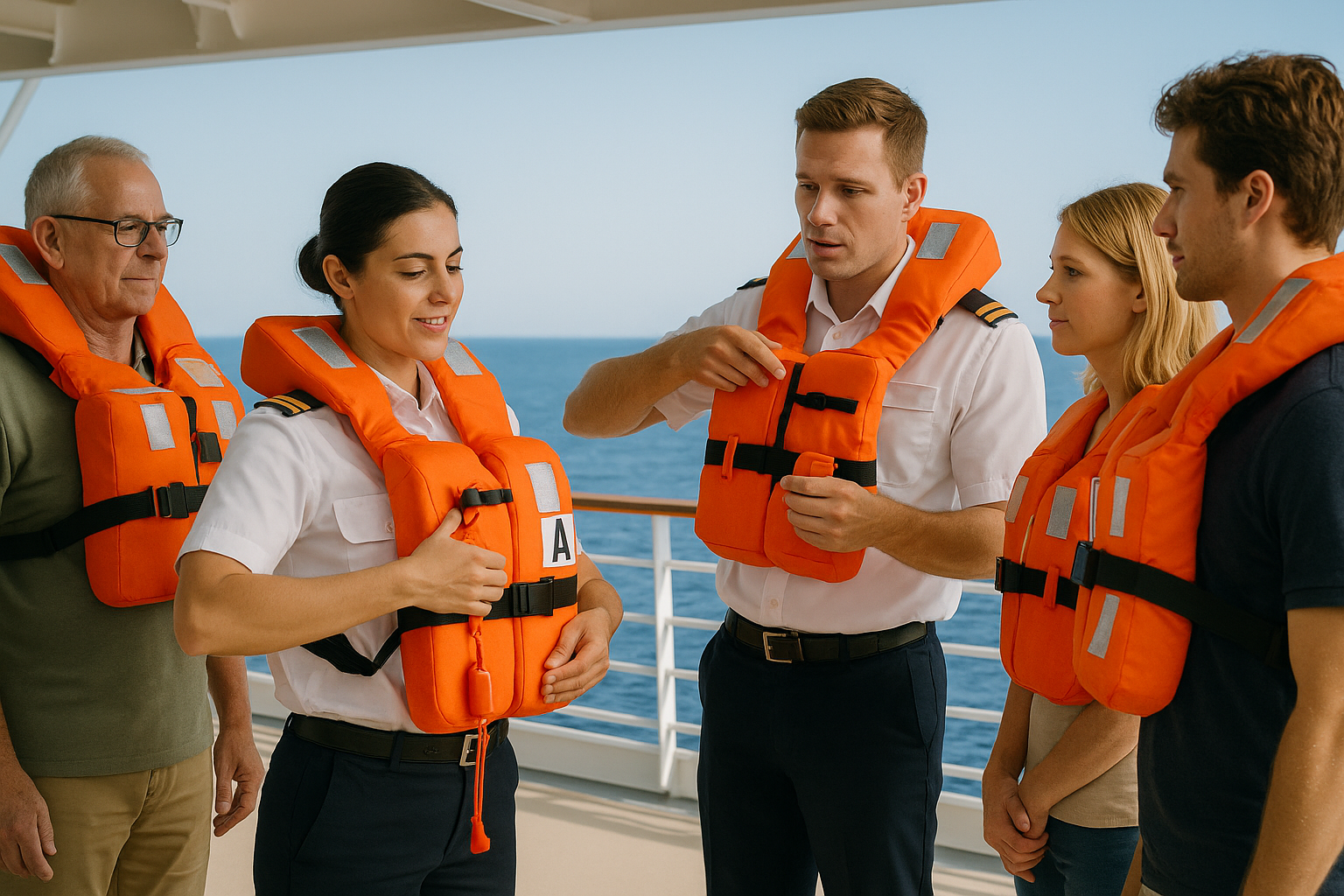
Every few years, a dramatic incident — a shipwreck, an outbreak, a crime aboard — sends cruise bookings into a brief panic. The news cycle amplifies the worst stories. But are cruise ships actually unsafe, or does the coverage distort a much more reassuring reality? We went through the data. Here’s what it actually shows.
Safety Statistics vs. Land-Based Travel
Cruise ships are statistically among the safest travel environments you can put yourself in. The numbers are not close.
The most meaningful comparison is death rate per passenger journey. According to cruise industry data and maritime safety organizations, the fatal accident rate aboard cruise ships is approximately 0.3 deaths per million passengers — a figure that includes all causes, from natural causes to falls to rare maritime accidents. For context, the road fatality rate in the United States is approximately 70 deaths per billion vehicle miles traveled, which translates to a risk several orders of magnitude higher than cruising.
The perception problem is partly one of reporting. When something goes wrong on a cruise ship, it generates headlines. A fender-bender on a highway does not. The dramatic context of a ship — the ocean, the scale, the contained environment — makes news editors reach for the story faster. This creates a systematic bias where cruise incidents are over-indexed in public awareness relative to their actual frequency.
The cruise industry operates under some of the most rigorous safety regulations in any transport sector. The International Maritime Organization (IMO), flag state requirements, the U.S. Coast Guard for ships in American waters, and mandatory third-party classification societies all impose overlapping safety requirements that exceed what most land-based hospitality and transport operators face.
CDC Cleanliness Inspections: What Our Data Shows
One of the most credible public measures of cruise ship safety is the CDC’s Vessel Sanitation Program (VSP). Every ship carrying 13 or more passengers in U.S. waters is subject to unannounced inspections covering water systems, food safety, kitchen practices, pool chemistry, ventilation, and overall hygiene. Ships are scored on a 100-point scale; anything below 86 is a failure.
We analyzed 1,893 CDC inspections covering 245 ships and 51 cruise lines from 2014 to 2025 — one of the most comprehensive analyses of this dataset published. Here’s what the data shows:
The cruise industry’s cleanliness has measurably improved. The industry average inspection score has risen from 94.7 before the pandemic to 96.1 currently. Only 2% of all inspections result in failure — and importantly, ships that do fail tend to remediate quickly and pass on re-inspection.
Disney Cruise Line has never failed a CDC inspection. Across 65 inspections over the study period, Disney maintained a 100% pass rate with an average score of 98.2 — the highest consistency of any major cruise line in the dataset.
Carnival has the most inspections of any line (319) with a strong sanitation track record. Despite carrying more passengers than any other operator, Carnival maintained solid grades and a 1.9% failure rate. Carnival recorded just one CDC-investigated outbreak during the study period.
Oceania Cruises improved the most of any line (+3.3 points), climbing from a 95.4 early average to 98.8 — the highest recent score of any cruise line we evaluated.
The counterintuitive finding: Despite improving inspection scores, gastrointestinal outbreaks have nearly doubled since the pandemic. Pre-pandemic, the CDC investigated an average of 11 outbreaks per year. In 2024, that number hit 18. In 2025, it reached 23 — the worst outbreak year in at least a decade.
This paradox has a likely explanation: inspections measure a ship’s sanitation infrastructure, not person-to-person viral transmission. A ship can score a perfect 100 and still experience a norovirus outbreak if a single infected passenger boards. With the industry carrying record passenger volumes on ships that are larger than ever, the density conditions for rapid norovirus spread have intensified. The ships are cleaner than ever. The pathogens are opportunistic regardless.
The full methodology and findings from our CDC study are available in our comprehensive cruise line cleanliness report.
Norovirus: The Real Health Risk on Cruise Ships
Let’s address this directly: norovirus is the primary public health risk on cruise ships. It is not a cruise-specific pathogen. It causes outbreaks in schools, nursing homes, restaurants, daycare centers, and cruise ships — cruise ships simply have mandatory reporting requirements that make outbreaks visible. Most land-based restaurant and hotel outbreaks go unreported entirely.
Norovirus spreads through person-to-person contact — touching a contaminated surface then touching your face — and through contaminated food and water. It is extremely contagious and the infectious dose is very small. The typical illness lasts 24-48 hours with vomiting, diarrhea, and nausea. It is miserable but almost never dangerous for healthy adults.
How to protect yourself:
- Wash hands aggressively with soap and water at every opportunity. Alcohol-based sanitizers (which are everywhere on cruise ships) are less effective against norovirus than soap and water.
- Avoid touching the buffet serving utensils if others have been handling them without using the serving tools — use a fresh piece of the tongs, hold them by the handle only.
- If you feel any symptoms of illness, notify medical immediately. Staying in your cabin when ill prevents you from spreading it to hundreds of other passengers.
- Consider your sailing during outbreak-heavy seasons. Late 2024 and 2025 saw elevated norovirus rates across the industry.
One important data point: the CDC defines a cruise ship outbreak as any voyage where 3% or more of passengers or crew report gastrointestinal illness. Even in a “worst case” outbreak like the Queen Mary 2 sailing in December 2024 that we documented — where 13.5% of passengers fell ill — 86.5% of passengers on that ship were completely unaffected.
Crime Rates on Cruise Ships
Cruise ship crime is reported under the Cruise Vessel Security and Safety Act (CVSSA), which requires U.S.-flagged and U.S.-ported ships to report certain crimes to the FBI. The FBI publishes these statistics annually.
What the data shows: The most common crimes reported are theft and assault. Sexual assault cases are the most serious category and receive the most FBI attention. The industry has faced legitimate criticism for how some lines historically handled crime reports — discouraging reporting, inadequate investigation, difficulty preserving crime scenes on a vessel that moves across jurisdictions.
The reform picture: The CVSSA has materially improved reporting and investigation standards. Cruise lines are now required to maintain security personnel trained to handle crime scenes, provide victim support, and report crimes to the FBI within specific timeframes. Many lines have added CCTV coverage across ship public areas that now makes investigation substantially easier.
Realistic risk assessment: The reported crime rate per passenger-voyage on cruise ships is substantially lower than in most U.S. cities. A 7-night cruise with 4,000 passengers generates several thousand passenger-days of activity in an environment with 24/7 CCTV, a controlled access manifest (the ship knows everyone onboard), and professional security personnel. The controlled environment with identity verification is meaningfully different from a city hotel district.
Practical safety advice: Keep your cabin locked, use the safe for valuables, be aware in port environments where the ship’s security perimeter doesn’t apply, and never leave drinks unattended at bars. These are the same precautions that apply in any travel context.
Medical Facilities Onboard
Modern cruise ships are not hospitals, but they are significantly better equipped than most people expect.
Most ships with over 1,000 passengers operate a fully functioning medical center staffed by licensed physicians and registered nurses, available 24 hours a day. Facilities typically include:
- Emergency care capability
- IV drip stations for dehydration (the most common treatment needed)
- Defibrillators and cardiac monitoring equipment
- Minor surgical capability (wound closure, fracture stabilization)
- Pharmacy with a broad range of prescription medications
- Diagnostic equipment (X-ray on most large ships, basic laboratory capabilities)
Ships maintain telemedicine arrangements with onshore hospitals — real-time consultations with specialists are possible via satellite link.
The limitation: Cruise ship medical centers are not designed for major cardiac events, complex surgical cases, or serious trauma. Medical evacuations happen when conditions exceed onboard capability, and they are expensive (typically $30,000-$80,000+ depending on location and mode of evacuation). This is the primary reason travel insurance — specifically medical evacuation coverage — is not optional for cruising.
Destinations matter for medical coverage. A Caribbean or Alaska cruise operates within relatively close range of advanced medical facilities. Remote destinations like Antarctica, the South Pacific, or the Amazon River involve genuinely long evacuation times. Travelers with significant pre-existing conditions should discuss itinerary selection with their doctor.
Man Overboard Prevention
Man overboard events are rare but devastating when they occur. The cruise industry has implemented meaningful technology improvements in the last decade:
Man overboard detection systems: Most new and recently refurbished ships use camera-based or radar-based detection systems that automatically alert the bridge if a person enters the water. Response times have improved dramatically.
Railings and barriers: International maritime regulations specify minimum railing heights for all overboard-accessible decks. Cruise line design standards typically exceed the minimums. The overwhelming majority of man overboard events involve people deliberately climbing over or past safety barriers — not accidental falls.
Alcohol as a factor: A significant proportion of overboard incidents involve intoxicated passengers. The risk reduction here is personal — knowing your limits aboard is as practical a safety measure as any.
Ships conduct rescue operations whenever a man overboard is detected, and they are legally required to return to the scene. Recovery depends on sea conditions and how quickly the event is detected.
Fire Safety
Cruise ship fire safety is governed by SOLAS (Safety of Life at Sea) regulations — among the most demanding fire safety standards of any built environment. Modern cruise ships are constructed with:
- Compartmentalized fire zones that can be sealed to prevent spread
- Sprinkler systems throughout the ship (including cabins)
- Smoke and heat detection in every space
- Muster stations and crew-rehearsed evacuation procedures
- Enough lifeboat capacity for every person onboard (plus additional life rafts)
Major cruise ship fires have occurred historically — the Carnival Triumph in 2013 being the most prominent recent example — but fire-caused passenger deaths on cruise ships are extremely rare in the modern era. The response to near-misses and actual incidents drives continuous regulatory tightening through IMO standards.
Your role in fire safety: Note the location of fire exits when you first board. The muster drill (mandatory before departure) covers your muster station and basic emergency procedures. Take it seriously even if it seems routine.
COVID-Era Changes That Stuck
The cruise industry’s COVID-era safety protocols produced several lasting improvements:
Enhanced ventilation: Post-COVID ships and retrofitted older vessels have significantly upgraded HVAC systems with higher air exchange rates and improved filtration. The industry-wide investment in air handling systems between 2020 and 2023 benefits passenger health in ways that extend beyond COVID protection.
Faster illness identification and isolation: Protocols developed during COVID for rapid isolation of symptomatic passengers are now embedded in standard operating procedures. Ships now act faster when passengers report gastrointestinal or respiratory symptoms.
Hand sanitizer saturation: The density of hand sanitizer stations across cruise ships — which was already high — became even more comprehensive post-COVID. Nearly every entrance to a dining venue, entertainment space, or high-traffic corridor now has a station.
Digital health documentation: Many lines moved to digital health forms and streamlined the screening process for passengers who disclose pre-existing conditions or symptoms at check-in.
Safety Tips for Families
Cruising with children introduces specific safety considerations beyond the standard adult precautions:
Children’s wristbands: Most lines issue children wristbands at boarding with cabin numbers and parent contact information. Use them and keep them on throughout the sailing.
The muster drill: Make sure children understand the muster station procedure. Kids remember concrete information — “if you hear this alarm, we go here.”
Pool supervision: Cruise ship pools are not supervised as lifeguarded pools on land typically are. Never assume pool safety for young children without parental supervision.
Youth programs and drop-off zones: Know exactly where your children are when they’re in youth club programs. Reputable lines (Disney, Royal Caribbean’s Adventure Ocean, Norwegian’s Splash Academy) maintain documented check-in and check-out procedures. Verify them at the first drop-off.
Cabin balconies: Balcony railings are high enough to prevent most adult falls but are not designed to be toddler-proof. Supervise young children on balconies the same way you’d supervise them near any elevated edge.
The Bottom Line
Cruise ships are not risk-free environments — no complex system involving tens of thousands of people in a marine environment ever will be. But the data consistently shows that the risks are lower and better managed than popular perception suggests.
The two genuine risk areas worth taking seriously: norovirus (manageable with hand hygiene and avoiding contact when symptomatic) and medical evacuation costs (covered by travel insurance that you should buy without exception). Everything else — ship safety systems, crime, structural integrity, fire safety — sits at levels that are competitive with or better than equivalent land-based hospitality environments.
The 31 million passengers who cruise globally each year are doing so in an environment that is cleaner, better monitored, more medically capable, and more structurally safe than at any prior point in the industry’s history. The data says you’re in good hands.