
Alaska Cruise Guide: Inside Passage vs Gulf Route, Best Ports, and Planning Tips
The complete Alaska cruise guide covering Inside Passage vs Gulf routes, port breakdowns, best cruise lines, month-by-month timing, and must-do excursions.
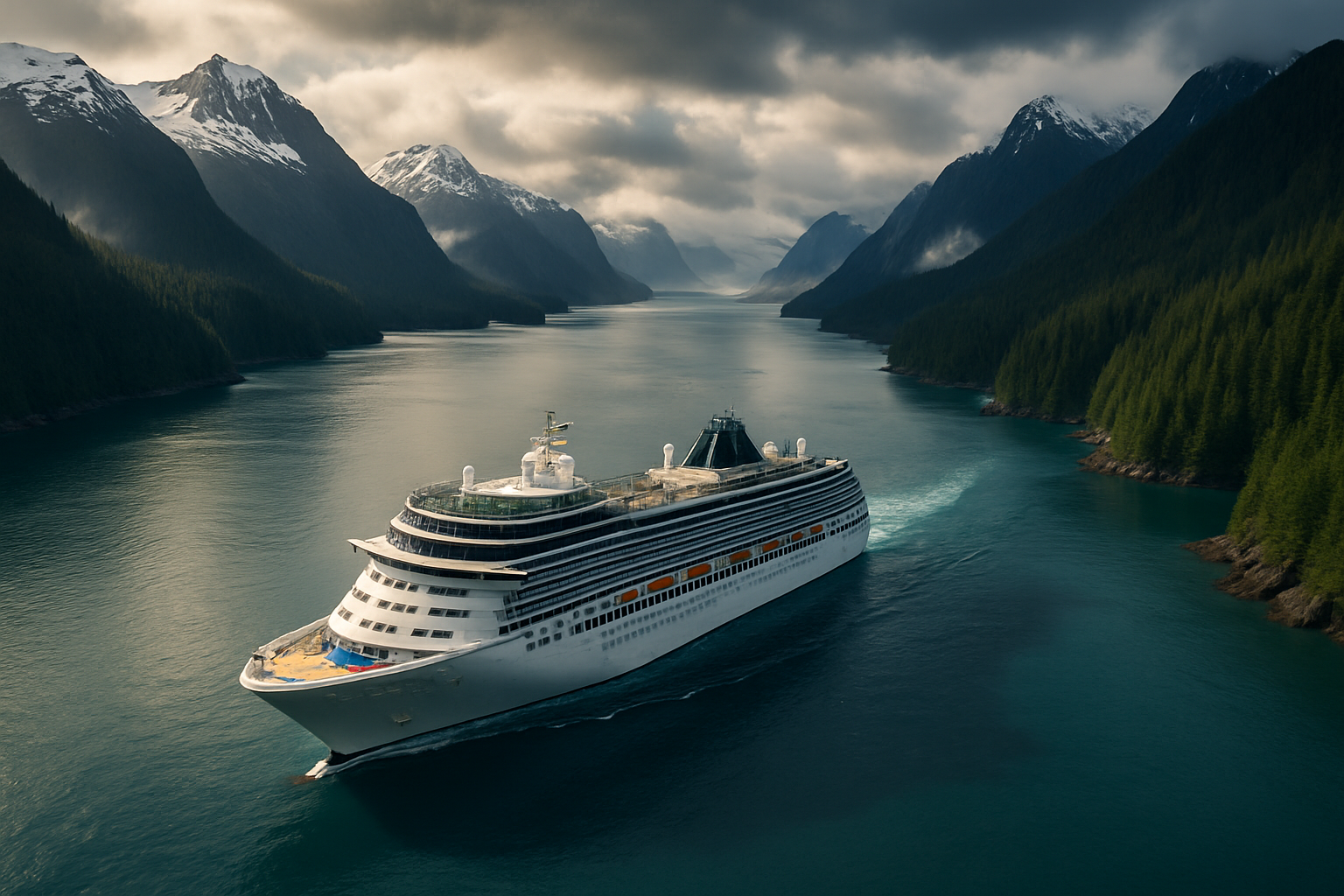
Alaska is the cruise destination that changes people. Passengers who’ve done a dozen Caribbean sailings come back from Alaska and say it’s unlike anything else they’ve experienced. The glaciers are bigger than you expect. The wildlife is closer than you believe possible. The silence of a fjord at 6 a.m. is the kind of thing you think about for years. If you’re planning an Alaska cruise — or trying to decide whether it’s right for you — this guide covers everything you need to know.
Two Routes, Two Very Different Experiences
The single biggest decision in Alaska cruise planning is which route you take: the Inside Passage or the Gulf of Alaska. Both routes visit many of the same ports, but the experience on the water is fundamentally different.
The Inside Passage
The Inside Passage is a protected network of waterways running along the coast of British Columbia and Southeast Alaska, shielded from the open Pacific by thousands of islands. Ships sailing the Inside Passage spend most of their time in relatively calm, sheltered water — which is good news if you’re prone to seasickness. The scenery is relentless: narrow channels, dense spruce forests, waterfalls dropping straight into the sea, and frequent wildlife sightings from the deck.
Inside Passage cruises are almost always round-trip sailings out of Seattle or Vancouver. You depart, work your way north through the same general corridor, and return to the same port after seven nights. The upside is convenience — you fly in and out of one city. The downside is that you’re retracing the same water, though the scenery genuinely looks different depending on the direction and light.
Typical Inside Passage ports include Juneau, Skagway, Ketchikan, and Sitka, with a scenic cruising day through Glacier Bay or Tracy Arm Fjord.
The Gulf of Alaska (Northbound/Southbound)
Gulf of Alaska itineraries cross open ocean, sailing from either Seattle or Vancouver up to Seward (the port for Anchorage) or Whittier, or doing it in reverse. Because these sailings start at one port and end at another, they’re called one-way cruises — which means you need to book flights into one city and out of another, or arrange a land tour connection.
The Gulf route adds destinations the Inside Passage doesn’t reach: Hubbard Glacier (the largest tidewater glacier in North America), Icy Strait Point, Valdez, and the ports of Seward and Whittier. Crossing the Gulf of Alaska also means two sea days with open-water conditions — motion you’ll feel more than on the Inside Passage. If open-ocean sailing doesn’t bother you, the tradeoff is worth it for the additional scenery and more varied ports.
The short answer on which to choose: First-time Alaska cruisers who want convenience and calm water should start with the Inside Passage. Repeat Alaska visitors, those interested in the Kenai Peninsula and Anchorage, and anyone doing a land-sea package should look at the Gulf route.
Port-by-Port Breakdown
Juneau
Alaska’s capital city is accessible only by air or sea — there are no roads in or out. That isolation gives Juneau a particular character: it’s compact, walkable from the cruise pier, and genuinely worth exploring on foot even if you don’t book an excursion. The two big attractions are the Mendenhall Glacier, about 12 miles from downtown (accessible by bus or shuttle), and the Mount Roberts Tramway, which lifts you above the treeline for panoramic views.
For excursions, whale watching in Juneau is among the best in Alaska — humpbacks are a near-certainty in season. Helicopter flightseeing to glaciers is spectacular but expensive. Budget for it if this is a once-in-a-lifetime trip.
Skagway
Skagway feels like a well-preserved Gold Rush town because it essentially is one. The entire historic district is a National Historic Park. Most visitors are here for one excursion: the White Pass & Yukon Route Railroad, a narrow-gauge railway that climbs through the mountains on tracks built by Klondike gold miners in 1898. It’s touristy, yes — but it’s also genuinely breathtaking, and the engineering involved is astounding. Book early because it sells out.
Skagway is also a good base for hiking or biking to Dyea, the ghost town at the base of the Chilkoot Trail.
Ketchikan
Often the first Alaska port on southbound itineraries, Ketchikan is known for two things: rain and totem poles. The rain is real (Ketchikan averages over 150 inches per year), so pack a light waterproof layer regardless of the season. The totems are extraordinary — the Totem Bight State Historic Site and the Totem Heritage Center both offer a serious look at Tlingit and Haida culture.
Ketchikan is also the gateway to the Misty Fiords National Monument, which you can access by floatplane or boat. Flightseeing here is arguably better value than Juneau helicopter tours.
Glacier Bay National Park
Glacier Bay is a UNESCO World Heritage Site and one of the most significant scenic cruising experiences in North America. Ships spend a full day sailing deep into the bay, approaching tidewater glaciers close enough to hear them calve — giant chunks of ice crashing into the frigid water. Rangers from the National Park Service board the ship at the bay entrance and narrate the voyage. No shore time is taken here; it’s a full day of standing on deck with binoculars, cameras, and a hot drink.
Not every itinerary includes Glacier Bay — access is limited to protect the ecosystem — so check before booking if this is a priority for you.
Sitka
Sitka was the original capital of Russian Alaska, and that history is still tangible. The onion-domed Saint Michael’s Cathedral in the town center, the Russian Bishop’s House, and Sitka National Historical Park (home to a forest trail lined with totem poles) all tell a layered story that most Alaska ports don’t offer. Sitka is also positioned on the outer coast, giving it different wildlife exposure than Inside Passage ports — sea otters, Steller sea lions, and excellent birding.
Seward
Seward is the southern terminus for Gulf of Alaska itineraries. The town itself is small, but it’s the gateway to Kenai Fjords National Park, one of the most concentrated wildlife-viewing areas in Alaska. Boat tours into Kenai Fjords reliably deliver orcas, sea otters, puffins, Steller sea lions, and glaciers calving into the sea. If you’re doing a northbound sailing that ends in Seward, build in at least one extra day before flying out to do the Kenai Fjords tour.
Seward is also the starting point for land tours to Anchorage, Denali, and Fairbanks through the cruise line’s land-sea packages.
Best Cruise Lines for Alaska
Princess Cruises
Princess has the most extensive Alaska operation of any cruise line, with the largest fleet presence, the most itinerary variety, and the longest history in the region. Their Princess Lodges at Denali, Kenai, Copper River, and other locations integrate seamlessly with their land-sea packages, making them the go-to choice for anyone combining an Alaska cruise with interior land touring. Their MedallionClass technology also makes embarkation and onboard experience notably smooth.
Holland America Line
Holland America has operated in Alaska since 1947 and treats the destination with corresponding seriousness. Their ships are mid-size (not mega-ships), which means they fit into ports where the largest vessels can’t go and spend more time at scenic areas. HAL also integrates with McKinley Explorer domed railcars and wilderness lodges through their Alaska Land+Sea Journeys packages. This is a strong choice for older travelers and anyone prioritizing naturalist programming.
Celebrity Cruises
Celebrity brings a more premium, modern experience to Alaska — sharper food, sleeker ships, better included amenities. Their Celebrity Edge and Solstice-class ships are among the most comfortable ways to do the route. Celebrity tends to appeal to travelers who want the Alaska scenery without sacrificing creature comforts.
Norwegian Cruise Line
NCL is the value play in Alaska, typically offering more flexibility (thanks to their Freestyle Dining approach and fewer formal nights) at a lower base price. Norwegian’s Alaska ships are larger than HAL’s, which gives them more onboard entertainment but slightly less intimate port access in some locations.
Month-by-Month: When to Go
Alaska’s cruise season runs from May through September. Here’s how the months break down:
May: Crowds are lower, prices are usually the best of the season, and the landscape is brilliantly green with snowmelt. The downside is colder temperatures (40s–50s°F in most ports) and some services not yet at full capacity. Daylight is already excellent — 18+ hours by late May.
June: The sweet spot for many experienced Alaska cruisers. Crowds are building but not overwhelming, weather is improving, wildlife viewing is excellent, and almost all attractions and excursion operators are running. Humpback whales are reliably present in feeding grounds.
July: Peak season. Expect the warmest temperatures (mid-60s°F in some ports), the highest prices, and the most crowds at popular sites like Mendenhall Glacier. Wildlife viewing remains strong. Book excursions months in advance for July sailings.
August: Still excellent conditions with slightly lower prices than July as families return from summer travel. Salmon are running in rivers, which concentrates bears at streams — bear viewing excursions peak this month.
September: The best kept secret of Alaska cruise season. Crowds thin dramatically, prices drop, the foliage begins turning gold and red, and wildlife is still active. Ships start reducing their schedules mid-month, so options narrow, but early-to-mid September can offer the best combination of value and experience for flexible travelers.
Land+Sea Packages: Are They Worth It?
Land+sea packages (called “cruisetours” by most lines) combine a standard Alaska cruise with land-based time at Denali National Park, the Kenai Peninsula, or the Alaska interior. Princess and Holland America offer the most polished versions, typically including comfortable wilderness lodges, domed railcar transfers, and naturalist-led activities.
The honest assessment: if you’re making a dedicated Alaska trip and have 10–14 days, a land+sea package transforms a great vacation into an extraordinary one. Denali in particular is a genuinely different Alaska experience from what any ship can offer — the scale of the Alaska Range is staggering. If you’re time-constrained or this is more of a regional sampler, a standard 7-night sailing delivers tremendous value on its own.
Wildlife Viewing Tips
Alaska wildlife is abundant, but seeing it well requires a bit of strategy.
Bring binoculars. This is the single most impactful thing you can pack. Bears on shorelines, eagles on branches, and mountain goats on cliff faces are all common sightings — but you’ll miss most of them without magnification. A 10x42 compact pair takes up minimal luggage space.
Spend time on deck in scenic areas. Humpback whales breach unexpectedly, and the people who see them are the ones outside. When your ship is sailing through Frederick Sound, Chatham Strait, or any narrow channel, linger on deck rather than retreating to the lounge.
Book wildlife-specific excursions. Whale watching by small boat gets you closer and provides a more focused experience than ship deck sightings. Flightseeing gives you aerial perspective on wildlife corridors and terrain that’s impossible to appreciate from sea level.
Go early in port. Wildlife is most active in the morning hours. If an excursion gives you the option to go at 7 a.m. versus 11 a.m., take the early departure.
Must-Do Excursions Across the Route
- White Pass & Yukon Route Railroad (Skagway) — Non-negotiable for first-timers.
- Whale watching by small boat (Juneau or Sitka) — More intimate and more likely to produce close encounters than ship-deck sightings.
- Kenai Fjords National Park boat tour (Seward) — The most wildlife-dense single excursion available anywhere on the route.
- Helicopter glacier walk (Juneau) — Expensive, but landing on a glacier and walking on ancient ice is a bucket-list moment.
- Misty Fiords flightseeing by floatplane (Ketchikan) — One of the best value flightseeing experiences in Alaska.
- Bear viewing at Anan Wildlife Observatory (Wrangell) — If your itinerary includes Wrangell, this is worth every penny.
Packing for Alaska: The Short Version
Alaska weather is genuinely unpredictable. You can have sunshine and 65°F in Juneau and rain and 48°F in Ketchikan on the same day. Pack in layers: a moisture-wicking base layer, a fleece or insulating mid-layer, and a waterproof outer shell. Waterproof hiking shoes or boots serve better than sneakers for most excursions. Wool or synthetic-blend socks are worth bringing. Gloves and a hat are useful even in July on deck in the morning hours.
Alaska is not a shorts-and-sandals destination. Pack accordingly and you’ll be comfortable regardless of what the weather delivers.
Final Thoughts
An Alaska cruise rewards preparation more than almost any other destination. The travelers who get the most out of it are the ones who book excursions early, spend time on deck when the ship is in scenic areas, and come with a genuine curiosity about the natural world and the Indigenous cultures of the region. It’s a destination that has nothing to do with poolside cocktails and everything to do with the kind of scale and wildness that very few places on earth can still offer.